top of page

Viking Shadows
In The Valley
Vikings and tourism
By Drew Strickland/ CNA journalism

John Gale is the current lighthouse keeper at Cape Anguille Lighthouse. He believes that like L'Anse aux Meadows, Vikings could mean tourism will expand.
Kyle Greenham/ CNA journalism
Known its gentle rolling hills and lush farmland, the Codroy Valley area may have welcomed its most significant group of tourists last year.
In 2015, a group of archaeologists and a film crew came in search of evidence that the area was once home to the Vikings. The two-weeks they spent there turned up the remnants of a hearth. They also found bog iron, something the Vikings smelted in hearths. It was used in such everyday things as rivets.
The area was first settled in 1822 by a handful of English families and would later see an influx of people from Cape Breton - Acadians, Irish and Scottish. But if the Viking discovery is confirmed, the area’s history will change dramatically.
The region is made up of 15 small communities and is known for the Long Range Mountains, long meadows and a landmark lighthouse. Houses are spread out, and the area population only numbers in the hundreds.
The small spit of lands juts out into the North Atlantic and requires explorers to walk more than an hour along the coastline and through bogs to get there. It’s there that Vikings are believed to have collected bog iron and smelted it.

Edwin and Geraldine Gale own the E. W. Gale convenience store in Millville, the closest store to Point Rosee. Edwin is excited about the commercial opportunities a Viking discovery would provide but doesn’t want to get too excited.
“We don’t want to order
The Grand Daddy's Swimming is located across the street from the E. W. Gale convenience store.
Kyle Greenham/ CNA journalism
500 Viking items and it don’t pan out to be what we’re hoping it is,” said Edwin Gale, who owns the store in Millville.
He and his wife Geraldine run the family store that has been in his family for generations. They sell everything from guitars to chainsaws.
Entrepreneur Melvin Hibbs is living his dream of building a campsite in St. Andrews, not far from the Point Rosee site. Hibbs has plans to add some Viking themes to his campsite, but he hasn’t determined what these plans will amount to yet
“When I think of the Vikings here, I think of money,” said Hibbs, while rubbing his hands.
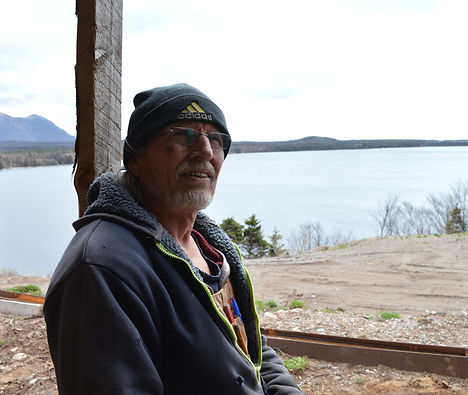
Melvin Hibbs is building a campsite near Point Rosee. If the Vikings are confirmed, he will likely incorporate it into his project.
Kyle Greenham/ CNA journalism
His campsite is built on land that amateur archeologist Wayne MacIsaac believes is also a Viking settlement.
Hibbs is dedicating the campsite to his son, Melvin Jr., who died in a plane crash in 2002 and to his son’s wife Audrey, who died in 2014. Melvin Jr. was said to have done a lot to help kids. He taught Tae Kwon Do in Antigonish, N.S., to underprivileged children. The campsite will be a family-oriented park where kids can run around and play.
“A place for people to bring their kids and enjoy and do things my son never got to do,” said Hibbs as his gaze falls towards the ground.
Shawn Tilley, who teaches economics at the College of the North Atlantic in Stephenville, says the community has a lot of potential, but the community needs to work together to benefit from it.
“The major obstacle for the community is getting support for the project,” said Tilley. “A lot of people are willing to take, but they're not always willing to give.”
Another obstacle facing the community is a lack of infrastructure to accommodate tourists. There are very few hotels, and those that do exist are small, which would force many tourists to stay in other communities such as Port aux Basques, 50 kilometres away. The community is also spread out, and the Viking site is isolated with no easy access for tourists.
“There is a lot of potential in Codroy Valley to profit greatly from tourism, but there is no economic potential unless (they) build (the tourism industry)” said Tilley.
bottom of page