
Viking Shadows
In The Valley
The man who cried Viking
By Nathan Barnes/ CNA journalism

Wayne MacIsaac has been researching Vikings since he was 18 years old. He believes the Vikings had a settlement in the Codroy Valley.
Kyle Greenham/CNA journalism
Wayne MacIsaac was once considered the boy who cried “Viking”. Now, it appears his claims have been vindicated.
A resident of St. Andrew’s and an amateur archaeologist, MacIsaac maintained since he was 18 that Vikings once called the Codroy Valley home.
Over the years, he has invited archaeologists from the provincial government to come and look at a number of sites he has identified as possible Viking settlements. Each time, however, MacIsaac says he was told there was nothing to see in the area. Then, unexpectedly during the summer of 2015, archaeologist Sarah Parcak arrived in the Codroy Valley looking to investigate the area known as Point Rosee.
When the archaeologists came to the Point Rosee, MacIsaac approached them to find out what they were looking for in the area.
“I heard from Douglas Bolunder, the lead Norse specialist on this, and he believes that what they have over there is only part of something more extensive in the area,” said MacIsaac.
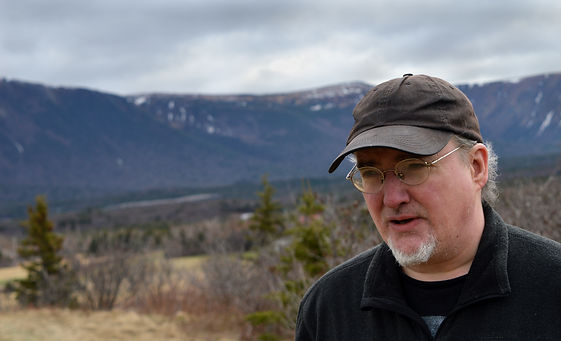
The mountains, a salt water lake and a sandbar are all features mentioned in the Norse Sagas. These similarities lead Wayne to his assertion that the Vikings had inhabited Codroy Valley.
Kyle Greenham/CNA journalism
The dig, which took place at the site on Point Rosee, was discovered through the use of satellite imaging. MacIsaac says he got a look at the dig and that it seemed focused on a particular area on the point.
“They didn’t do random digs anywhere, they had located what they wanted to look at through satellite imagery, and then they had it pinpointed on GPS … This is a really new way to do archaeology,” said MacIsaac.
The technique is called satellite archaeology.
“They were only there for two weeks; there wasn’t a whole lot of time … They did a trench, I’m just guessing now, that was probably about 10 feet wide and 18 feet long,” said MacIsaac.
Given his personal interest in archaeology, MacIsaac has researched Viking lore and history in depth. His knowledge of the Norse

Wayne has showed his findings to archaeologists from the province. However, he says, they have yet to take further steps to uncover what may be in the area.
Kyle Greenham/CNA journalism
Sagas is extensive, having read five or six different translations of the Vikings’ accounts of heroism and expeditions to other lands. It was the descriptions of the landmarks held within the sagas that lead MacIsaac to the idea that the Codroy Valley may have been a Viking settlement. Until the most recent supposed discovery, MacIsaac worried the Vikings of the Codroy would remain undiscovered.
In the future, he said, the hope is the team will return and investigate the site located just south of Point Rosee.
The excitement of having a lifetime of research and work acknowledged in professional circles was overwhelming for MacIsaac. He says he didn’t sleep for three days after finding out that they were starting to look into the possibility of a site at Point Rosee. Better yet, it seems his assertions the area was once a Viking epicenter on the island may be truth.
“What they found over at Point Rosee over there suggests that this was an important spot to (Vikings),” said MacIsaac.
The team of archaeologists found what they believe to be the remnants of a hearth and bog iron. The Vikings would collect the bog iron and smelt into a more usable form of iron.
As for what this means for the area, MacIsaac hopes there will be more tourism and maybe even a few jobs for residents of the area.
“It’s certainly going to be a big thing,” he said. “Obviously there’s going to be the tourist thing. We’re very close to the Newfoundland ferry here. It will be fairly easy for people to get here. There will be work involved; there will be some jobs come out of it. I’m more interested in the historical side. I don’t think I’m going to get anything out of it, other than just to have the story told.”